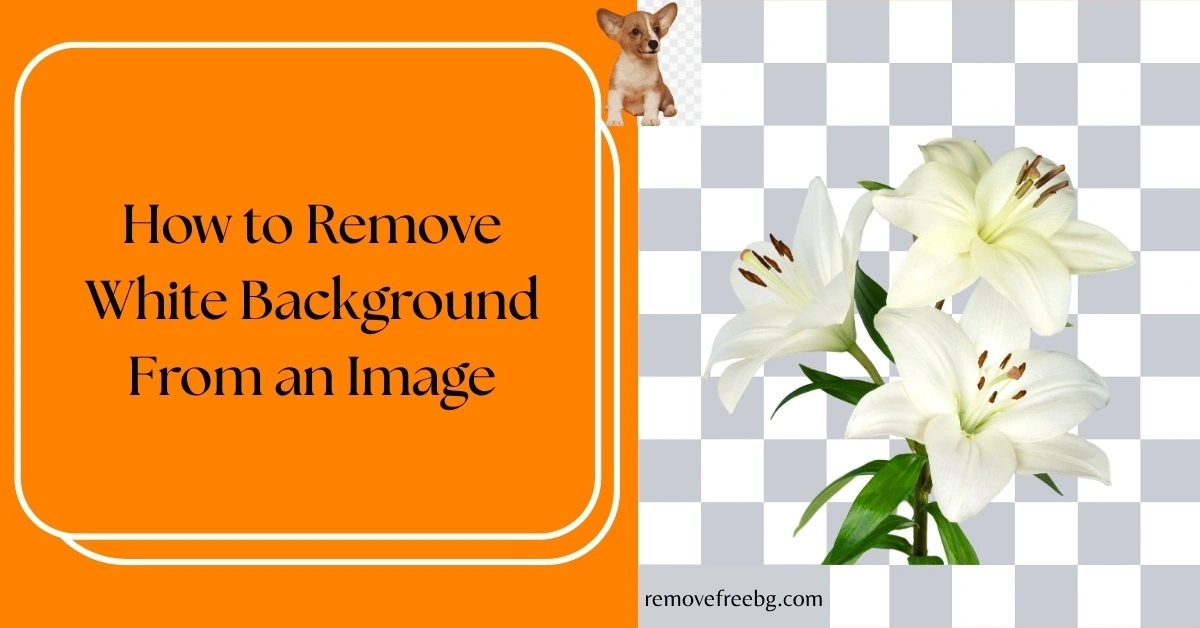
How to Remove White Background From an Image
A simple guide to turning white-background images into clean, transparent visuals online or from your phone.
RemoveBG
Aug. 27, 2026
Table of Contents
- How to Remove a White Background From an Image Quickly
- Why You Should Not Simply Delete All White Pixels
- Method 1: Use an AI Background Remover
- Method 2: Use a Built-In Background Removal Tool
- Method 3: Remove the White Background Manually
- AI vs. Manual Removal: Which Is Better?
- How to Make the Background Transparent After Removing White
- Common Problems When Removing a White Background
- How to Remove a White Background From Product Images
- How to Remove a White Background From a Logo
- How to Get Better Results From an AI Background Remover
- Do You Need Photoshop to Remove a White Background?
- Conclusion
- Frequently Asked Questions
A white background can make an image look clean, but it is not always useful.
You may want to place a product on a different background, add a logo to a design, create a transparent image for a website, or reuse a subject in social media content. In these situations, simply having an image with a white background is not enough, you need to remove the white area while keeping the main subject intact.
The good news is that you do not need specific software.
AI background removal can now identify a person, product, animal, or object and separate it from the surrounding background in seconds. With RemoveFreeBG, you can remove backgrounds online, and the tool is also available for Android and iOS, making it easier to edit images without moving them to a desktop computer.
However, there is one important thing to understand:
Removing a white background is not always the same as making an image transparent.
The right method depends on the image and how you plan to use it afterward.
This guide explains how to remove a white background, when AI works better than simple color removal, and how to avoid common problems such as missing white objects, rough edges, and incorrect file formats.
How to Remove a White Background From an Image Quickly
For most images, the easiest option is to use an AI background remover.
The basic process is simple:
-
Upload or select your image.
-
Let the AI identify the main subject.
-
Remove the background automatically.
-
Check the edges for missing details.
-
Download the result as a transparent PNG when you need transparency.
With RemoveFreeBG, this workflow can fit naturally into different ways of creating content. You can remove a background online from a browser or work from your mobile device using the Android or iOS app.
This is useful for product photos, social media visuals, logos, clothing, and other digital content.
The important difference is that AI background removal does not simply try to delete every white pixel. It attempts to identify what belongs to the subject and what belongs to the background.
Why You Should Not Simply Delete All White Pixels
A common mistake is to use a basic color-selection tool and remove every white pixel from an image.
This can work for some simple graphics, but it often creates problems with photographs.
Imagine an image containing:
-
A person wearing a white shirt
-
White sneakers
-
A wedding dress
-
A white product
-
A logo with white details
-
A glass or semi-transparent object
If the editing tool removes everything that is white, it may accidentally remove parts of the actual subject.
The result can include:
-
Holes in clothing
-
Missing product details
-
Unwanted transparent areas
-
Rough or jagged edges
This is where AI can be more useful.
Instead of asking the software to remove a particular color, AI background removal attempts to understand the image as a whole.
The goal should not be: Remove everything white.
It should be: Keep the subject and remove what is actually behind it.
Method 1: Use an AI Background Remover
For most people, AI is the simplest way to remove a white background.
Instead of manually tracing around the subject, the AI analyzes the image and separates the foreground from the background.
Step 1: Upload Your Image
Choose the image you want to edit.
If possible, start with the original file rather than a heavily compressed screenshot or an image that has been repeatedly saved and shared. Better source quality gives the AI more visual information to work with.
You can use RemoveFreeBG online when working from a browser. If the image is already on your phone, for example, a product photo you have just taken, you can also continue the workflow through the Android or iOS app.
Step 2: Let AI Detect the Subject
The AI analyzes the image and determines which areas belong to the main subject.
For a product image, this could be the product itself.
For a portrait, it may identify the person, including details such as clothing, facial features, and hair.
Step 3: Review the Result
Automatic background removal saves time, but it is still worth checking the result.
Pay particular attention to:
-
Hair
-
Fur
-
Thin objects
-
Jewelry
-
Fingers
-
Transparent materials
-
Small product details
Most simple images will require little or no further work. More complex images may need additional refinement.
Step 4: Save the Image Correctly
If you want to use the cutout on another background, download or save it in a format that supports transparency.
For most digital-content workflows, PNG is the most common choice.
Method 2: Use a Built-In Background Removal Tool
Some image-editing and design applications include their own automatic background-removal features.
This can be useful when you are already working inside that application and want to avoid moving the image between multiple tools.
The workflow is generally:
Open image → Remove background → Check result → Export with transparency
This approach can work well for simple images with clear subject boundaries.
However, if your main goal is simply to remove a background quickly, a dedicated AI background remover can offer a more direct workflow.
The best option is the one that gets you from the original image to a usable result with the least unnecessary work.
Method 3: Remove the White Background Manually
Manual removal still has its place.
It can be useful for:
-
Simple logos
-
Icons
-
Illustrations
-
Screenshots
-
Images with clearly defined edges
In these cases, you can select the white background manually and remove it.
The challenge is choosing the right selection tolerance.
If the selection is too narrow, some background areas may remain. If it is too broad, parts of the subject may disappear.
Manual editing gives you more direct control, but it usually takes longer than AI, especially with photographs or images containing complex edges.
For most everyday content, a practical workflow is:
Use AI first, then manually correct only what needs correction.
AI vs. Manual Removal: Which Is Better?
|
Feature |
AI Background Removal |
Manual Removal |
|
Speed |
Usually faster |
Usually slower |
|
Ease of use |
Beginner-friendly |
Requires more editing skill |
|
Complex subjects |
Often handles them well |
Requires careful selection |
|
White objects |
Uses subject detection |
Can accidentally remove them |
|
Fine edges |
Depends on the AI |
Can be refined manually |
|
Direct control |
Limited by the tool |
Greater control |
|
Best for |
Photos and everyday content |
Specialized, precise edits |
For most users, AI provides the best starting point because it removes much of the repetitive work.
Manual editing becomes useful when you encounter a detail that automation cannot handle perfectly.
How to Make the Background Transparent After Removing White
Removing the visible white background is only part of the process.
You also need to save the image in a format that preserves transparency.
Use PNG When You Need Transparency
PNG supports transparent areas.
That means you can place the cutout over:
-
A website background
-
A social media design
-
A marketing graphic
-
A colored background
-
A presentation
-
Another photograph
This makes PNG particularly useful for reusable digital assets.
Be Careful With JPG
JPG or JPEG does not support transparent backgrounds.
If you remove the background and then save the image as a JPG, the transparent area cannot remain transparent. A solid background will replace it.
If your goal is a cutout that you can reuse in different designs, PNG is usually the better choice.
Common Problems When Removing a White Background
A white background may look simple, but the final result can still have problems.
The Subject Is Also White
This is where basic color removal often fails.
If you have a white product on a white background, deleting white pixels can damage the product itself.
AI background removal can be more useful because it tries to identify the object's boundaries rather than removing pixels based only on their color.
However, difficult images can still require careful checking.
A White Halo Appears Around the Subject
Sometimes a faint white outline remains around the subject.
This happens because edge pixels may originally have blended with the white background.
The problem may not be obvious while previewing the image against white. It often becomes more noticeable when the cutout is placed on a dark or colorful background.
Before using an important image, test it against a different background.
Hair or Fur Looks Rough
Hair and fur contain fine, irregular edges.
Poor background removal can make them look unnaturally cut, overly sharp, or partially missing.
Image quality and the specific AI processing method can affect the result. Starting with a clear, well-lit image gives the system a better chance of preserving these details.
The Background Is Not Actually Pure White
A background may appear white while containing:
-
Gray shadows
-
Uneven lighting
-
Slight color variation
-
Compression artifacts
A simple color-based removal tool may leave some of these areas behind.
AI can be more effective in these situations because it focuses on the subject-background boundary rather than searching only for one color.
How to Remove a White Background From Product Images
Product images are one of the most common uses for background removal.
Once a product is separated from its original background, you can reuse the same image in different types of content.
For example:
-
Online store graphics
-
Social media posts
-
Digital advertisements
-
Website banners
-
Seasonal campaigns
This can reduce the need to photograph the same product again for every new design.
When reviewing a product cutout, check:
-
Edges
-
Labels
-
Logos
-
Thin components
-
Reflections
-
Transparent areas
A background can be removed successfully while small errors remain around important product details. Those details matter, particularly when the image will represent a brand or product online.
For sellers and content creators who photograph products on a phone, having background removal available through Android and iOS can also simplify the workflow from taking the photo to preparing the final visual.
How to Remove a White Background From a Logo
Logos require a little more care.
If a logo is a simple graphic with a separate white background, removing that background can be straightforward.
However, make sure white is not part of the logo itself.
For example, white lettering, symbols, or design elements can accidentally disappear when using a basic "remove white" method.
The safest approach is to preserve the entire logo and remove only the area surrounding it.
Whenever possible, use the original logo file rather than editing a screenshot.
Afterward, save the result in a format that supports transparency so the logo can be used across different digital backgrounds.
How to Get Better Results From an AI Background Remover
A few simple steps can improve the final cutout.
-
Start With the Best Image Available: Higher-quality images generally provide clearer edges and more detail.
-
Avoid Heavy Compression: Compression can blur boundaries and create artifacts around the subject.
-
Check the Edges, Not Just the Center: The main subject may look perfect while small details around the edges are missing.
-
Test the Image on Another Background: Try placing the transparent image against a dark or colorful background to reveal white halos or rough edges.
-
Save in the Right Format: Use PNG when you need transparency.
These small checks can prevent problems when the image is later used in a website, social media post, advertisement, or other piece of digital content.
Do You Need Photoshop to Remove a White Background?
No.
Photoshop remains useful for complex professional editing, but it is not necessary for every background-removal task.
AI background removal is particularly useful when you want to:
-
Remove a background quickly
-
Create a transparent image
-
Edit product photos
-
Prepare social media content
-
Work without learning advanced editing software
You can use RemoveFreeBG through an online workflow or from Android and iOS, depending on how you prefer to create and edit your content.
Professional editing software may still be useful when you need pixel-level control, complex compositing, or detailed manual retouching.
For many images, however, AI can complete the task without the extra complexity.
Conclusion
You do not need specific photo editing software to remove a white background from an image.
For most digital-content workflows, AI background removal provides a faster and simpler way to separate a subject from its surroundings. You can use RemoveFreeBG online or work from an Android or iOS device, making it possible to fit background removal into the way you already create content.
The key is not to remove every white pixel blindly.
Instead, identify the subject, remove the actual background, review the edges, and save the result in a format that supports transparency.
Whether you are preparing a product photo, creating a social media graphic, editing a logo, or building another type of digital content, a clean transparent image gives you more flexibility, and you can create one with AI background removal tool.
Frequently Asked Questions
Can I remove a white background from an image?
Yes. You can use an AI background remover to identify the main subject and remove the surrounding background without manually editing the image.
How do I make a white background transparent?
Remove the background, then save the image in a format that supports transparency, such as PNG.
Can I remove a white background on my phone?
Yes. You can use RemoveFreeBG from a mobile workflow through its Android and iOS availability, allowing you to remove backgrounds without transferring the image to a desktop computer.
Why is my white background still visible after removing it?
You may have saved the image as a JPG, which does not support transparency. You may also be seeing a white preview background rather than an actual background saved into the image.
Will removing a white background remove a white object too?
It can when using a basic color-based tool that deletes white pixels. AI background removal is generally better for photographs because it attempts to identify the subject instead of removing pixels based only on color.
What is the easiest way to remove a white background?
For most images, an AI background remover is the easiest option. Upload or select the image, let AI separate the subject from the background, check the result, and save it as a transparent PNG if needed.
# Related Posts

How Changing Photo Background Affects Perception in Photography
Explore the power of visual storytelling with changing photo backgrounds.
RemoveBG
April 16, 2026

Why Background Eraser Matters for Professional Visuals
The essentiality of background erasers in visual content
RemoveBG
April 16, 2026
How Transparent Backgrounds Improve Branding?
Streamlining your brand's message with effortless design
RemoveBG
April 16, 2026